I had a plan. Like most of my plans in the past, it seemed reasonable—efficient even. A desk, just the right size to slot into a space I could quickly clear in the little room at the back of the kitchen. A room that had long ago stopped being the kids’ playroom and had quietly transformed into something more like the forgotten storeroom of a toy shop. Floor-to-ceiling clutter, shelves bursting with ten Christmases’ worth of plastic dreams, many of which had been played with once—maybe twice—before being consigned to the shadows.
My plan was to carve a narrow corridor through the chaos, wedge in my new desk, set up my gaming PC, and spend my week off lost in my digital world—ignoring everything around me, especially the mess. That was my idea of progress. Minimal effort. Maximum distraction. A shortcut to my version of peace.
But here’s the thing about shortcuts—they’re nearly always a trap, especially when they’re born in the mind of a recovering alcoholic. My plans, even now, are so often dressed up versions of old thinking: convenience over connection, control over cooperation, isolation over intimacy. The truth is, I still try to take the easy road, the road that gets me what I want without too much discomfort or humility.
So, when the desk arrived, so did the look from my wife—the one that says, “Whatever you’re planning isn’t happening without my say.” She didn’t raise her voice. She just asked, “Where’s that going to go?” I replied with my usual confidence, “Don’t worry, I have a plan.” And I did. But it was my plan. Not our plan. Not God’s plan. Mine.
Then Monday morning arrived. And something subtle but profound happened. Instead of crashing into the day like I always used to—fuelled by restlessness, driven by results—I followed my new routine. Reading. Sunrise meeting. A longer-than-usual meditation. I didn’t rush. I didn’t panic. I paused. And in that stillness, something softened.
When my wife woke up, I didn’t go straight into action. I sat with her. Talked through my plan. And instead of meeting me with resistance, she simply said, “Can I make a suggestion?”
That word—suggestion—hit different. Because suggestions have become sacred to me. The suggestions in the rooms of Alcoholics Anonymous have saved my life. They’ve helped me stay sober, stay sane, and build something resembling a life worth living. So why wouldn’t her suggestion be just as worthy of listening to?
She offered to help me clear the room completely, donate the toys to charity, and even buy the paint to make it a space that worked for both of us. In the past, I’d have taken that as criticism—proof she was trying to ruin my plan. I would’ve thrown my toys out of the pram (alongside the other 500 already in there), sulked, and probably drank on it. But this time was different. This time I paused, listened, and felt the quiet nudge of truth in what she was saying. It felt right—a new compass point I’m learning to trust.
So off we went to buy supplies, and then we got to work. Bin bags, paint brushes, aching backs, and laughter. What began as a selfish escape plan became a shared labour of love. By the end of the first day, the house looked like Toys “R” Us had exploded, but the room itself was clear. I’d even managed to get the first coat of paint on. I was physically shattered but spiritually settled. No midnight overthinking. No restless legs or racing thoughts. I hit the pillow and woke up in daylight.
The days that followed were hard graft. Knees, elbows, and backs complained, but something beautiful was unfolding—not just in the room, but in us. Halfway through the second day, while painting the skirting boards, a hedgehog wandered up to the back door, stuck its nose in, and just… watched. It didn’t seem afraid. It didn’t run. It sat with me. A little sign from the universe, maybe, that I was exactly where I was supposed to be.
By day three, we were exhausted. But happy. I assembled the furniture, and suddenly the space had a new energy—light, purpose, peace. It wasn’t just a gaming nook anymore. It was a creative room. A room for growth. A room I had earned.
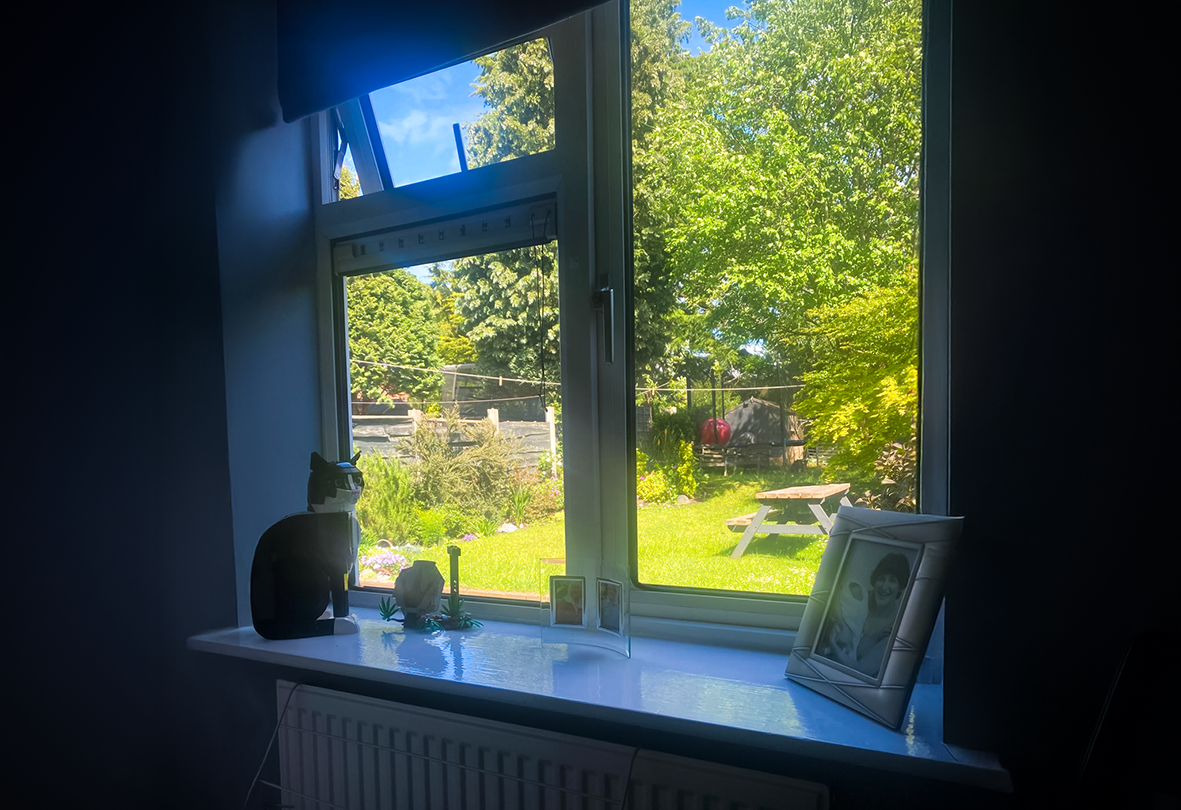
On the fourth day, we tied up the last bits: another run to the tip, a visit to the charity shop, a trip into the depths of the loft. And finally, in the quiet afternoon, I sat at my desk and wrote this. Sunlight streamed through the window, the view of the garden calm and green. The house was tidy. My wife was smiling. And for the first time in a long time, so was I— completely, from the inside.
Looking back, it’s easy to see that none of this would have happened if I hadn’t committed to learning a new way of living—the AA way. Not the way we invent, but the one that’s been handed down through the Twelve Steps and shared freely in the rooms by those who’ve walked before us.
Without the programme, I’d have pushed forward with my original plan. I’d have cut corners, ignored suggestions, isolated myself, and blamed others when it all felt empty. I’d have fed the part of me that still wants what it wants, when it wants it, no matter the cost.
But recovery has taught me to pause before I pick up the first think—whether it’s a drink, a resentment, or a selfish idea disguised as brilliance. It’s taught me that willingness opens the door to transformation. That humility invites connection. And that listening—really listening—to the experience and suggestions of others is often where the real growth begins.
I’m learning that my plans, on their own, aren’t enough. Because they were born in the mind of someone who used to drink to solve everything. A mind wired for shortcuts, detours, and instant gratification. But the Steps have given me something greater than a plan. They’ve given me principles. And those principles guide me now, even when it’s uncomfortable. Especially then.
So yes, I got my desk. And I got my space. But more than that, I got to live in alignment with something deeper. Something honest. Something sober. And in doing so, I discovered that the work is worth it—not just for the room, but for the life I’m building around it.
A Room at the Back of the Kitchen
I had a plan.
So precise,
so cleverly efficient,
it fit exactly into the shape,
of my old thinking.

A desk.
A narrow corridor through chaos.
A space for escape,
not for life.

The room,
once alive with the voices of children,
had fallen silent,
under the weight of forgotten joys.
The ghosts of ten Christmases,
watched from sagging shelves.

And I,
the architect of comfort,
sought a shortcut through their dust.

But the Way does not follow shortcuts.
It curves,
it flows,
it waits.

Plans are useful,
but only when they are soft.
Mine was sharp,
honed by the blade of old instincts:
control,
distraction,
withdrawal.

The recovering mind is a clever beast.
It wears masks,
even sobriety,
can be a disguise,
if worn without surrender.

Then came her question:
"Where’s that going to go?"

Not a challenge,
a ripple in still water.

And I replied,
as I always did:
"Don’t worry. I have a plan."

But it was my plan.
Not her plan.
Not Gods.
Just mine.

That morning,
I did not rush.
I read.
I breathed.
I met the sunrise with silence.

And in stillness,
something softened,
a gate unlatched
without sound.

She said,
“Can I make a suggestion?”

And it struck me like thunder,
without the storm.
For in the rooms where I was saved,
suggestions are sacred,
gifts wrapped in humility.

So we cleared the room,
not just of toys,
but of old ways.
We painted,
laughed,
ached together.

What was mine,
became ours.

What was escape,
became sanctuary.

A hedgehog came to the door
and stayed awhile,
bearing no message,
but presence.

Even the smallest creature,
can carry God,
on its back.

And by the fourth day,
the room was reborn.
Not as a retreat,
but as a temple
for creation,
for companionship,
for peace.

The garden outside smiled.
So did she.
And at last,
so did I,
from the inside.

Know this:
the shortcut,
is almost always a trap.

The easy road,
leads far from home.

But the quiet path,
the one that waits for you to listen,
is already under your feet.

Let go of the plan.
Pick up the brush.
Clear the room.
And in that stillness,
begin again.