Tao Te Ching – Chapter Thirty-Eight
Written by Lao-tzu – From a translation by S. Mitchell
The Master doesn't try to be powerful;
thus he is truly powerful.
The ordinary man keeps reaching for power;
thus he never has enough.

The Master does nothing,
yet he leaves nothing undone.
The ordinary man is always doing things,
yet many more are left to be done.

The kind man does something,
yet something remains undone.
The just man does something,
and leaves many things to be done.
The moral man does something,
and when no one responds,
he rolls up his sleeves and uses force.

When the Tao is lost, there is goodness.
When goodness is lost, there is morality.
When morality is lost, there is ritual.
Ritual is the husk of true faith,
the beginning of chaos.

Therefore the Master concerns himself,
with the depths and not the surface,
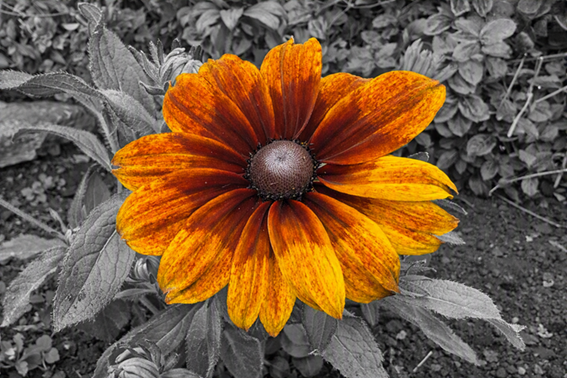
with the fruit and not the flower.
He has no will of his own.
He dwells in reality,
and lets all illusions go.
How I Read This Chapter
True power asks for nothing.
It flows quietly, like a river.

The more we grasp for control,
the further we stray from peace.

The Master doesn't strive,
and so, nothing is left undone.

But when the Way is forgotten,
we chase appearances,
virtue, rules, reputation,
and lose the truth beneath them.

Rituals replace reality.
Performance replaces presence.

The Master stays with the root,
not the decoration.
With what is real,
not what looks good.

And so he is free.
What This Means To Me
This chapter shines a light on how recovery has shifted my understanding of power, virtue, and what it means to truly live in the Way. Before I got sober, I thought strength came from outer power—from appearing put together, from saying the right thing, from making sure no one saw how broken I really was. But the more I tried to hold it all together, the more things quietly fell apart.
“The Master doesn’t try to be powerful—thus he is truly powerful.” This line really got the grey matter going. In addiction, I was constantly trying to be something—strong, capable, moral, kind. I performed these identities to convince myself and others that I was okay. But deep down, I knew it was an act. I clung to moral codes even as I broke them. I talked about love while lying. I wanted to be seen as good, even while I was dying inside.
The Tao tells the truth I was afraid to face: when we lose the Way, we replace it with systems—goodness, morality, ritual. These aren’t bad things. But when they’re disconnected from the source, they become hollow. I know what it’s like to live from that place—saying all the right things but feeling nothing real behind them. I know what it’s like to cling to “doing the right thing” while secretly filled with resentment and fear.
In recovery, I’ve had to learn a new kind of power. Not the power of achievement, but the power of surrender. Not the power of image, but the power of honesty. When I stopped trying to “do” recovery and started simply living it—from the inside out—I began to understand what the Tao means by doing nothing and leaving nothing undone.
It’s not about striving anymore. It’s about alignment. When I live close to my Higher Power, my God, my actions flow more naturally. I don’t need to prove I’m kind—I just be more kind. I don’t need to act moral—I just live more honestly. But when I drift from the source, I feel it. That’s when I start performing again, judging again, forcing again.
This chapter also warns of what happens when we settle for surface: “Ritual is the husk of true faith—the beginning of chaos.” I think of the times I clung to slogans without meaning them, or when I checked off steps without letting them change me. That’s the danger—replacing experience with performance, depth with display. True faith doesn’t need to be shown. It lives quietly. Humbly.
“The Master concerns himself with the fruit and not the flower.” That line brings me back to Step Ten—continuing to take personal inventory. Not just how I look, but what’s really going on inside. Am I rooted in truth? Or just trying to look good?
Today, I aim to stay with the root. With the source. With the real. That means pausing when I want to perform. Being quiet when I want to prove. Trusting that when I live from the inside out, what needs to be done will be done—and done well.
I don’t need to roll up my sleeves and force my way through life anymore. I just need to stay close to the centre. To dwell in reality. To let illusions go.
That is where the true power lies.